There are few events in human history that enchant and fascinate me as much as the July 20, 1969 landing of the Apollo 11 mission on the moon. After centuries spent looking up at the moon and dreaming, humanity finally managed to reach the previously unreachable and touch the giant, craterous rock that serves as the largest light in the night sky. Though, of course, politics were very much wrapped up in this achievement, as they often are, and though many choose to question the fact that the moon landing ever even occurred, the fact of the matter is that it is one of the most triumphant, awe-inspiring moments humanity has achieved to date.
I think almost every little kid raised in the United States has a phase where they dream of being an astronaut. When I was very little, I spent a year or two convinced I was somehow going to be the first woman on the moon, the first woman on Mars, and eventually also the first woman president. Even now that I'm grown, I dream of and look forward to the possibility of seeing somebody land on Mars (or even the moon again) in my lifetime. I would love to one day have a child sit, enraptured, watching in awe as a citizen of Earth steps foot on the surface of Mars for the first time, just as my father sat and stared in sheer amazement when the first moon landing was televised.
In the end, similarly to the stars, the moon serves as a beautiful, constant yet simultaneously ever-changing facet of nature that encourages the human residents of earth to never stop dreaming and continuing to reach for that which was once proclaimed unreachable. Just as once, a "giant leap" was made for all of mankind, there is no telling what other giant leaps the future still holds.
The challenge for this week is to take some time to admire the moon. Keep skywatching, fellow Observers, and I'll see you again soon.
Wednesday, March 14, 2018

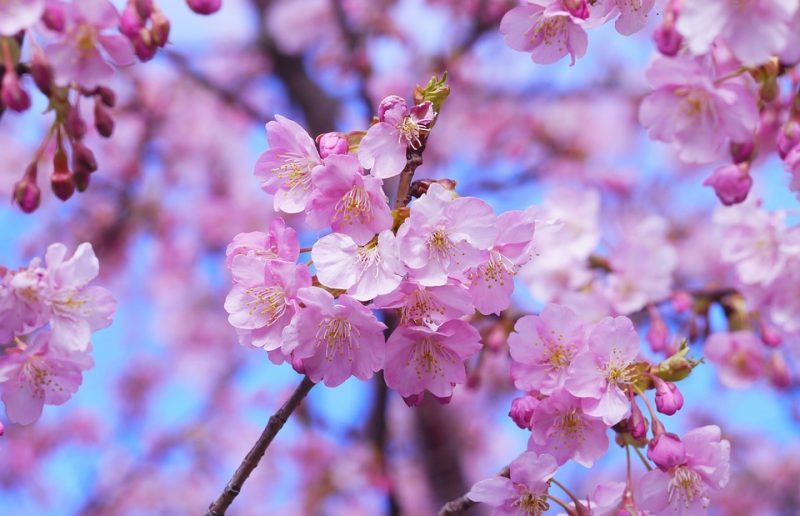
桜、桜、花盛り。/ Cherry Blossoms, Cherry Blossoms, Flowers in Full Bloom.
の山も里も
見渡す限り
霞か雲か
朝日に匂う
桜、桜
花盛り。
Sakura, Sakura
no yama mo sato mo
miwatasu kagiri
kasumi ka kumo ka
asahi ni niou
Sakura, Sakura
hanazakari.
Sakura (cherry blossoms), Sakura
On the mountains, in the towns
Blooms as far as we can see
Like the mist, like the clouds
Fragrant in the morning sun
Sakura, Sakura
Flowers in full bloom.
The above is one of the few Japanese songs I have memorized (and am therefore actually able to type out using my laptop). It is a traditional song, indicative of the beloved cherry blossom season, which begins in mid-March in southern Japan and continues throughout most of the month of April, as the blooms slowly work their way north over the early spring weeks.
In Japan, the cherry blossom is viewed as a symbol of the beauty, frailty, and brevity of life. The delicate blossoms explode into bloom all at once, and last only a few short days before being blown to the ground by the spring breeze or falling all on their own. To the Japanese people, the arrival of the cherry blossom season also signifies the end of the winter and the beginning of the spring. The Japanese school year ends on March 31st and begins again on April 1st, so this is also a season of exams, stress, impending graduations, and the launching from one school year right into the next. Amidst all of this educational worry and work, the presence of the blossoms and an afternoon spent admiring them can be a welcome period of relaxation and relief.

Here in Sioux City, the Morningside College campus boasts several beautiful cherry trees of our own, though we'll probably have to wait several more weeks to be able to see them in bloom--southern Japan, after all, is quite a bit warmer than northwestern Iowa this time of year. Even so, as the first few photos of cherry blossoms tweeted out by winter-weary, spring-eager Japanese accounts scroll across my Twitter feed, and the weather here finally slowly starts to grow a bit more decent, I find myself growing excited and eager to see the cherry blossoms here once they've bloomed in a month or so. Even more, I find myself growing especially excited to see the cherry blossoms in Japan next spring, when I will be spending a semester studying abroad. In the meantime, though, it sounds like for now I'm going to have to deal with a bit more snow this weekend. Hopefully one of these days soon, things will start really warming up for good, but for now, at least I have photos of freshly-bloomed cherry blossoms (which happen to be my favorite flower) to look at and daydream about until spring finally showers her gentle graces upon us poor Northern Plainers as well.
This week's challenge is to learn a bit about a flower or plant you've had an interest in for awhile but haven't ever really looked into. You might be surprised by the significance a seemingly-innocuous plant or flower might hold for another one of the beautiful cultures that also calls our marvelous Earth home. Keep your eyes out for the first signs of spring, my winter-weary fellow Observers, and I'll see you again soon.
Friday, February 16, 2018
My Favorite Tweeters
No, this is not a paid promotional post about Twitter accounts you should follow (though I could suggest a few good ones if you're interested). My favorite 'tweeters' have nothing to do with the digital world whatsoever, aside from the fact that you might spot them sitting on a telephone line sometimes. Yes, I'm talking about birds, our fine feathered friends who fill the trees with song and the skies with flying bursts of color.
The cool thing about birds is that, like bunnies, they come in both wild and domestic varieties. Recently I've been really fascinated by budgies and parakeets, but I don't know if those really count as part of "nature" since they're usually kept as pets. Even so, they make for some really great memes:
The Beach Boys aside, I love wild birds just as much as pet birds. Out of wild birds, I'd have to say that chickadees are my favorites. They're literally just little puffballs with cute little beady eyes and cheerful little chirps. I would love to one day be able to feed a chickadee out of my hand, but for now I guess I'll have to just content myself with watching them at my mom's bird feeder when I'm at home (yes, the same feeder of tree pig extortion fame).
 While I don't have a whole lot to say this week, birds are definitely an adorable, musical part of nature that anyone can easily enjoy by just looking out their window. As such, this week's challenge is to spot two different kinds of birds (bonus points if you can identify what species of bird they are). Keep your eyes on the skies, fellow observers, and I'll see you next Friday.
The cool thing about birds is that, like bunnies, they come in both wild and domestic varieties. Recently I've been really fascinated by budgies and parakeets, but I don't know if those really count as part of "nature" since they're usually kept as pets. Even so, they make for some really great memes:
The Beach Boys aside, I love wild birds just as much as pet birds. Out of wild birds, I'd have to say that chickadees are my favorites. They're literally just little puffballs with cute little beady eyes and cheerful little chirps. I would love to one day be able to feed a chickadee out of my hand, but for now I guess I'll have to just content myself with watching them at my mom's bird feeder when I'm at home (yes, the same feeder of tree pig extortion fame).
Friday, February 9, 2018
Living on Borrowed Light
The best way to start this particular post would be with another simple statement:
I am in love with the stars.

As far back as I can remember, I've always felt most at home when looking up at a nighttime sky full of stars. In the summer, I love standing outside until it gets dark, watching the fireflies (which I tend to call "little earth stars"), and waiting for the stars to come out. In the winter, I love bundling up, finding a hot drink, and standing outside in the snow while I look at the stars for awhile. For the past several years, whenever I get into an argument with my parents in the evening (which is, thankfully, quite a rare occurrence), I'll walk about a half of a block from our house to an empty, grassy lot from which I can happily, quietly watch the stars.
...Well, the lot is great for watching the stars, but only if you sit in a specific spot in the grass so that the giant floodlight from the nearby town co-op is mostly blocked by the branches of a tree.
And therein lies the problem.
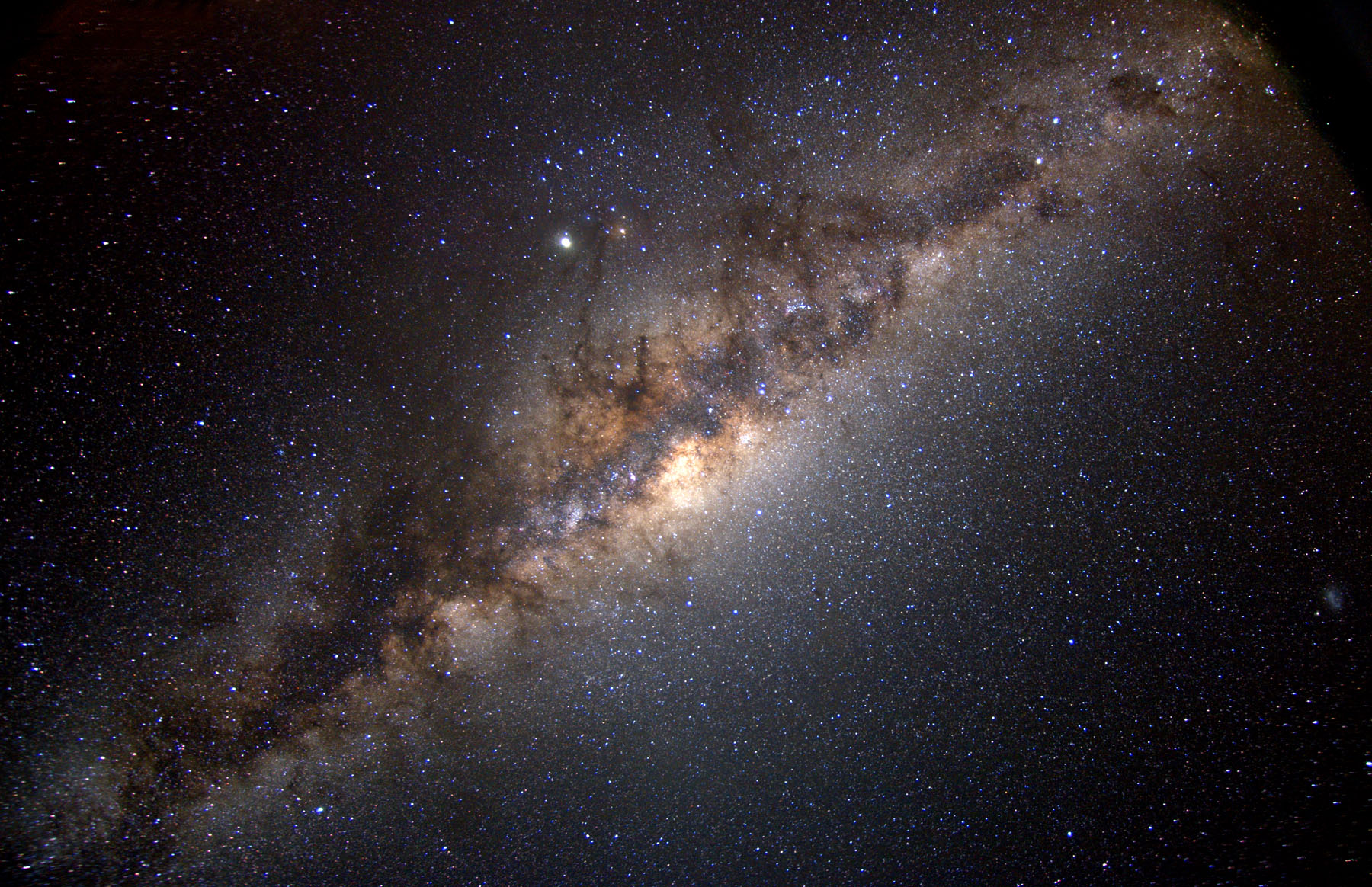
Even within my tiny town of about 1100 people, most of the stars are blocked from view. While a quick ten-minute drive into the countryside can fix that (on a clear night, you can vividly see the Milky Way even just a few miles outside of town), it just goes to prove how light pollution really is an issue that effects every one of us. In larger cities like Sioux City, even fewer of the stars are visible. My own Morningside College used to be home to one of the largest telescopic observatories in Iowa, but the site where the observatory used to be is now just a greenspace, and has been since long before I got here. The issue that forced the observatory's closure and eventual demolition? Light pollution, of course. You can't use a telescope to look at the stars if even the telescope can no longer see them.
But despite all of this, light pollution is an issue that tends to be paid very little attention. Of course, that's understandable. The fact that 80 percent of North Americans can't see the Milky Way from where they live (see here for the science behind that claim) pales in comparison to some of the scarier issues plaguing our world. Even so, as I mentioned in my first post, when we lose touch with nature, we lose touch with part of our own human nature (and one of the better parts, at that). Besides that, light pollution can be quite harmful to both human and animal health as well (see here, here, here, and here for some studies showing the truth behind those claims too).
So why does there seem to be such little concern about light pollution? Well, first of all, like I said above, there are much bigger and more pressing things to be afraid of. Secondly, there's really not a super easy fix (though sky-friendly lighting does exist). A lot of our society is run through activities that happen at night, whether hospital, utility, or emergency-response work--and all of those occupations require adequate light to take place. Simply switching off the lights clearly isn't a solution.
But... what if it was, even if only for one night?
Something I've always dreamed of is the idea that the world (or the nation, or the state, or even just the county) might one day agree to an annual holiday where every single light that can possibly be safely doused (streetlights, house lights, headlights, phone lights, etc.) is switched off for the hours from dusk until about midnight. Can you imagine what that would look like, entire cities, maybe even entire countries going dark for a few hours? What it would look like to the astronauts in Earth's orbit on the ISS, who'd be able to look down at the dark side of the earth and have it actually be dark? To some, this very idea might seem frightening, but to me, it sounds incredible. No matter where you were, the universe around you would be crystal clear to see. Billions of stars would scatter the skies, the Milky Way would steal center stage, and even tiny little shooting stars would be so much more visible than on any other night.
It often seems like I'm not the only person who dreams of such a night. French photographer Thierry Cohen, for example, loves taking scenes of major cities' skylines and clear photos of starry skies from about the same latitude, and superimposing the two on top of each other. The results, as you can probably imagine, are truly breathtaking:

So much beautiful art has been inspired by the stars, as well, but rather than chattering your ear off about it, I'll just share a couple of my favorite examples with you, one a painting, and the other, one of my favorite animated shorts I've discovered during my years of traversing the interwebs:
I am in love with the stars.
Image of a globular star cluster taken by NASA's Hubble Space Telescope
As far back as I can remember, I've always felt most at home when looking up at a nighttime sky full of stars. In the summer, I love standing outside until it gets dark, watching the fireflies (which I tend to call "little earth stars"), and waiting for the stars to come out. In the winter, I love bundling up, finding a hot drink, and standing outside in the snow while I look at the stars for awhile. For the past several years, whenever I get into an argument with my parents in the evening (which is, thankfully, quite a rare occurrence), I'll walk about a half of a block from our house to an empty, grassy lot from which I can happily, quietly watch the stars.
...Well, the lot is great for watching the stars, but only if you sit in a specific spot in the grass so that the giant floodlight from the nearby town co-op is mostly blocked by the branches of a tree.
And therein lies the problem.
Even within my tiny town of about 1100 people, most of the stars are blocked from view. While a quick ten-minute drive into the countryside can fix that (on a clear night, you can vividly see the Milky Way even just a few miles outside of town), it just goes to prove how light pollution really is an issue that effects every one of us. In larger cities like Sioux City, even fewer of the stars are visible. My own Morningside College used to be home to one of the largest telescopic observatories in Iowa, but the site where the observatory used to be is now just a greenspace, and has been since long before I got here. The issue that forced the observatory's closure and eventual demolition? Light pollution, of course. You can't use a telescope to look at the stars if even the telescope can no longer see them.
But despite all of this, light pollution is an issue that tends to be paid very little attention. Of course, that's understandable. The fact that 80 percent of North Americans can't see the Milky Way from where they live (see here for the science behind that claim) pales in comparison to some of the scarier issues plaguing our world. Even so, as I mentioned in my first post, when we lose touch with nature, we lose touch with part of our own human nature (and one of the better parts, at that). Besides that, light pollution can be quite harmful to both human and animal health as well (see here, here, here, and here for some studies showing the truth behind those claims too).
Photo of the Milky Way Galaxy taken by NASA
So why does there seem to be such little concern about light pollution? Well, first of all, like I said above, there are much bigger and more pressing things to be afraid of. Secondly, there's really not a super easy fix (though sky-friendly lighting does exist). A lot of our society is run through activities that happen at night, whether hospital, utility, or emergency-response work--and all of those occupations require adequate light to take place. Simply switching off the lights clearly isn't a solution.
But... what if it was, even if only for one night?
Something I've always dreamed of is the idea that the world (or the nation, or the state, or even just the county) might one day agree to an annual holiday where every single light that can possibly be safely doused (streetlights, house lights, headlights, phone lights, etc.) is switched off for the hours from dusk until about midnight. Can you imagine what that would look like, entire cities, maybe even entire countries going dark for a few hours? What it would look like to the astronauts in Earth's orbit on the ISS, who'd be able to look down at the dark side of the earth and have it actually be dark? To some, this very idea might seem frightening, but to me, it sounds incredible. No matter where you were, the universe around you would be crystal clear to see. Billions of stars would scatter the skies, the Milky Way would steal center stage, and even tiny little shooting stars would be so much more visible than on any other night.
It often seems like I'm not the only person who dreams of such a night. French photographer Thierry Cohen, for example, loves taking scenes of major cities' skylines and clear photos of starry skies from about the same latitude, and superimposing the two on top of each other. The results, as you can probably imagine, are truly breathtaking:

San Francisco skyline as it would look without light pollution, by Thierry Cohen
Maybe the concept of an annual holiday dedicated to the stars is a silly idea, and/or maybe I need to just plan on relocating to somewhere like Wyoming, where the skies are still often in clear view. But to me, losing the stars feels more like losing a giant, beautiful, diverse group of friends, and I don't want anyone else to have to lose them, either, whether now or in the future.
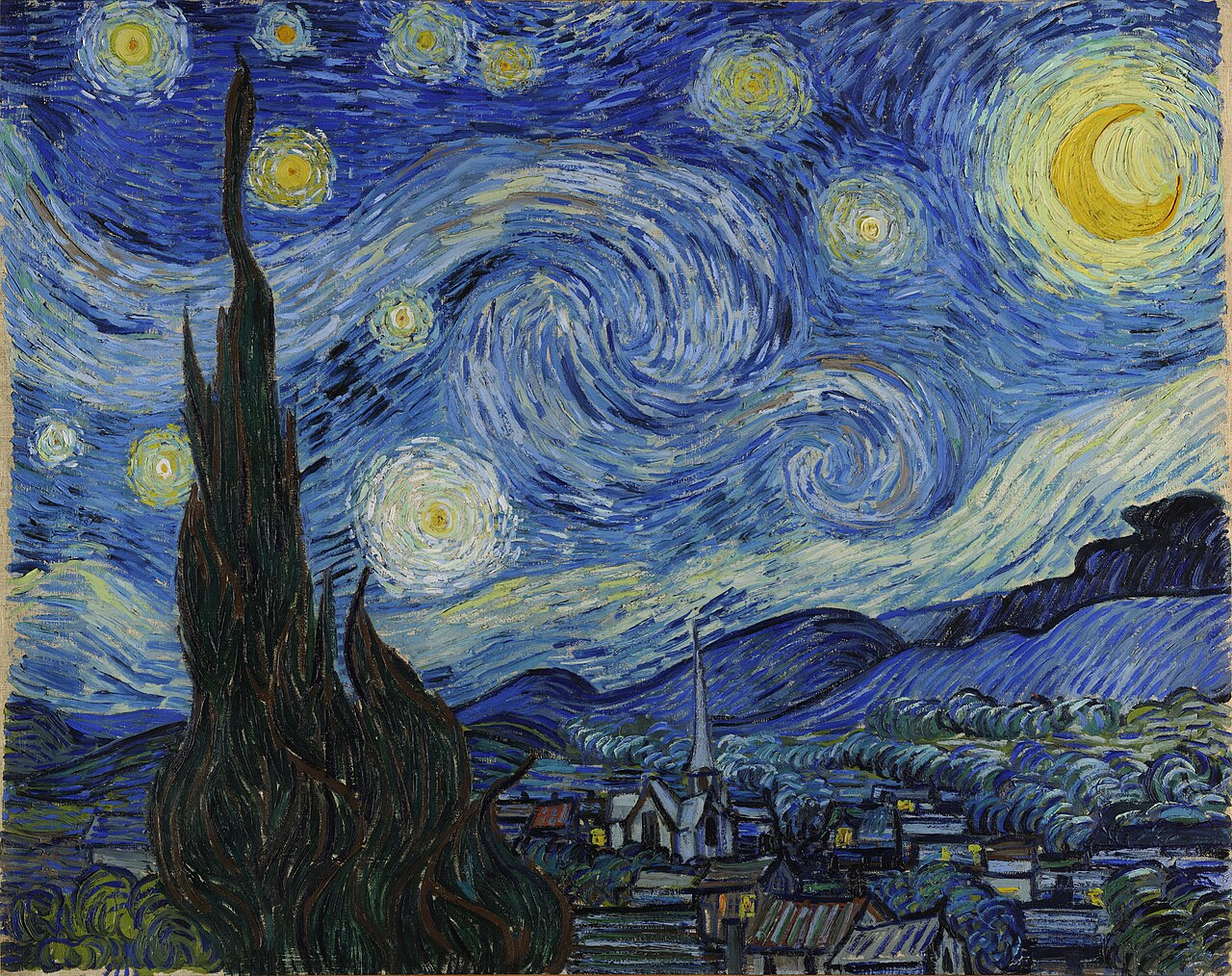
So much beautiful art has been inspired by the stars, as well, but rather than chattering your ear off about it, I'll just share a couple of my favorite examples with you, one a painting, and the other, one of my favorite animated shorts I've discovered during my years of traversing the interwebs:
Vincent Van Gogh's "Starry Night"
"Borrowed Light," an animated short film by Olivia Huynh
Like I said, maybe my dream of a night without artificial light is silly. Maybe the stars aren't all that important after all, at least not when compared with the many more-pressing issues out there. But to me, at least, the stars are my friends, and I'll always love spending an evening watching them from my tiny space on Earth below.
This week's challenge is to consciously take some time and look at the stars this week, even if only for just a couple of minutes. Dream big, fellow observers, and I'll see you next Friday.
Wednesday, February 7, 2018
A Poem as Lovely as a Tree

In today's era, trees are known to be precious for more than their visceral appeal. Trees act as natural smokestack scrubbers, cleaning the air around them by absorbing carbon dioxide and releasing fresh oxygen in trade. In the United States, there are very few old growth forests (forests which have been around since before the colonial era) that remain (a notable exception is the Redwood Forest in California). In South America, the Amazon Rainforest, the largest rainforest on earth, has already had 20% of its trees cut down, and continues to be destroyed at the rate of 22,000 square miles per year. Given that 20 percent of the world's oxygen is produced by the Amazon, it seems like it might be well worth protecting.
Of course, the visceral appeal of trees shouldn't be discounted either. I've had few happier afternoons than ones spent sitting against the trunk of a tree in late spring or early summer, reading a book, writing a story, or even just watching the world around me for a little while. One of my favorite trees to sit by, a maple tree I called "Old Creaky," actually fell down a few years ago after a rough storm. Old Creaky wasn't really that old compared to some of the other trees in my family's yard, but after it was struck by lightning and split down the center of its trunk sometime before we moved into the house, it slowly started to lose its structural integrity. On the bright side, though, that crack down the middle caused it to creak quietly whenever the wind blew by. On a mildly breezy day, sitting under Old Creaky felt almost like trying to eavesdrop on a distant conversation, one where you could hear the voices but couldn't quite make out any of the words. I'd lean against its trunk, straining my ears to catch all the tiny groans and creaks, and wishing (as silly as it may sound) that I could speak the tree's language and know what it was trying to say.
I've never loved a specific tree as much as I loved Old Creaky, but I've always loved trees in general. They seem like nature's best-dressed citizens in some ways, from the way they sprout into greenery (and sometimes flowers) in the spring, and then trade the green for beautiful shades of yellow, orange, and red in the autumn. Even in the winter, at their most bare, they are beautiful when adorned with frost, snow, or a thin sheen of ice. In the end, I suppose I can only agree with Kilmer to express my awe for and appreciation of trees: "Poems are made by fools like me, But only God can make a tree."

This week's challenge is to try and listen to a tree for awhile. If you'd rather stay inside, that's fine (the weather outside around where I live has certainly been unfit for both men and beasts recently); just find a tree near a window and listen to the branches bump into the glass. Who knows? You, too, might just find yourself straining to understand a conversation that you know you can hear, but just can't quite make out the words.
P.S.: I apologize for my tardiness on this post. I completely forgot about it on Friday (oops), and by the time I remembered "Oh duh, I have a blog," I was already swung back into the business of the week and didn't have a spare moment to sit down and get writing. Starting this Friday, we should be back on a regular weekly posting schedule.
Friday, January 26, 2018
A Word about Tree Pigs

(Photograph by Rae Clinkenbeard)
Last week, I joked at the end of my post for you to look forward to more "tails" of nature. Well, today we're talking about the long-tailed species known colloquially as "tree pigs," so now you can all enjoy (or at least tolerate) my pun that's been a week in the making. As for the "tree pigs," either you know exactly what animal I'm talking about the moment I say that term, or you're incredibly confused. Given that "tree pigs" is a species name which I've only ever heard my immediate family use, you more than likely fall into the latter category. Well, before the suspense gets too lethal, I'll go ahead and just tell you: "Tree pigs" are squirrels (aka family Sciuridae, according to Google).
That moniker might not make any sense at first, but I can assure you that it is entirely logical. If you've ever tried to set up a bird feeder, you probably know all about these long-tailed, fuzzy-faced little critters' voracious appetites. Squirrels will, to a great extent, eat pretty much anything and everything. They're quite cute, yes, but they're also quite the little army of gluttons. And they live in trees. Hence, "tree pigs." Fortunately, their obsession with all things edible makes for some pretty funny stories.
I am personally acquainted with two of these little armies of gluttons. One is the family of squirrels that lives in my family's backyard, and the other is the band of fearless rodents that calls the Morningside College campus home. Both groups have their own unique quirks and a few interesting anecdotes, so I'll share a couple of my favorites with you today.
The squirrels at Morningside are the most unafraid little creatures you will ever meet--as long as you don't get too close to them, that is. You can easily get within a foot of them sometimes (intentionally or not) before they finally scare and flee (and when they flee, it seems more like they teleport to the nearest tree than anything else). And these furry little thieves will eat pretty much anything they can get their hands on. In my time here, I've seen a squirrel with a pizza crust in its mouth, and another carrying around half a hamburger in its mouth, stolen from the outside dining area. Sometimes when it's warm out, I like to eat my lunch outside at one of the campus' picnic tables--but if one of your chips chances to blow off the table, congrats, you're never getting that back (not that you'd want it back, anyway).
But my favorite part about the squirrels here is how they stalk the English classrooms (which are on the third floor of one of the more historical buildings on campus). One of the English professors enjoys feeding the squirrels out of his office window (an experience in which I'd love to participate sometime), but the problem with this is that the squirrels now think that all of the third floor windows are magical portals to friendly giants with food. The funniest thing is when you glance up at a window in literature or writing class to unexpectedly make eye contact with a squirrel who's staring intently right at you, or when you're trying to concentrate and you suddenly hear through the window AC unit behind you the urgent chucking of a hungry rodent. The not-so-funny thing is that apparently the squirrels have, on more than one occasion, tried to chew through the window screens.
If an army of zombie squirrels ever gnaws their way through the windows and attacks the English department, at least we'll know which member of the faculty is to blame. (We all love him anyway.)
When it comes to the squirrels back home, they actually started out as enemies of my mother. No matter which branch of the huge backyard maple tree she hung her bird feeder from, they'd find a way to get to it, dump it out onto the ground, and eat all the birdseed. No problem, she thought, and purchased an iron pole from which to hang her feeder. The squirrels promptly began climbing it (usually intentionally waiting until my mother was present to watch them through our kitchen's sliding glass door) and getting to the food that way. My mother responded by coating the pole in Vaseline. This works as long as the Vaseline doesn't freeze (which does happen on occasion). The squirrels still tried to climb the pole, though, even if it was now without success.
My mother finally "struck a bargain" with the tree pigs by putting out a couple of squirrel feeders which we restock with dried cobs of corn every few days. (And anytime they run out of food, they make sure to let us know by coming and glaring at us through the above-mentioned glass back door.) Nowadays, the squirrels basically amount to what my mom calls "wild pets" (just like "her" birds at the feeder), though she still often watches them out the window and accuses them of being "coercive little monsters."
Which, I mean, she isn't wrong.
We've taken to naming the squirrels. It started with Nuttekin J. Squirrel (Nutty for short) and his lady love Squirrelefina. They lived in our backyard tree for a couple of years, until they both fell victim to that arch-nemesis of nature known as small-town traffic. Squirrelefina left behind a nest of three babies when she died, who were just old enough to be able to climb around and find food for themselves.
Well, most of them could climb. The runt, Baby, fell out of the nest (but thankfully survived) and was unable to climb back into the tree. We all sadly began to count her as lost, but... Well, as far as I know, she's still alive today (and did eventually learn how to climb the tree). For months, her two bigger siblings would get food from the squirrel feeders and other locations around the neighborhood and toss it down to her where she hung out around the tree roots, and I once saw one of them come down and "cuss out" (as my family refers to angry squirrel shouting) a curious cat that was getting a little too close to Baby. My mother and I didn't realize how empathetic and caring these fluffy, coercive little monsters could be, but Baby's bigger siblings clearly cared about her and her well-being. More than once, as it began to get dark outside, you could see the bigger squirrels looking down from their branches one last time to check on their baby sister down below before settling down for the night.
So, while squirrels are coercive, monstrous little tree pigs, I'm still rather fond of them all the same.
The challenge for the week is to spot at least five squirrels (and it can be the same squirrel five times, as long as it's on five separate occasions). Stay warm, fellow observers, and I'll see you next Friday.
Friday, January 19, 2018
Natural Encounters of Lagomorphic Proportions

I just really, really love bunnies.
Cottontail rabbits, as the species of rabbit seen in the picture above is slightly-more-technically called (Sylvilagus, according to Google, if you prefer the scientific name), are fairly common in the Midwestern United States. Over the years, I've lived in Missouri, Illinois, and Iowa, and each of those different places has certainly had their fair share of the twitchy-nosed, fluffy-tailed garden thieves. It's a safe bet that pretty much any walk through the neighborhood in any not-yet-totally-urbanized area around here (suburbs, small towns, farmland, you name it) will result in a rabbit sighting, as long as the weather is decent. Even when it's bitterly cold out (as it was here in Sioux City when I took the picture), there's still always a chance that you'll see a member of the neighborhood's longer-eared contingent out looking through the snow for food. And oftentimes, the morning after a nighttime snow, you just might see their snowshoe tracks gently imprinted upon the top of the newly-fallen, icy fluff.
While I am absolutely enamored with bunnies, my mother feels quite differently about them, and to be fair, she has good reason. As I mentioned above, cottontails tend to be notorious garden thieves. No matter what you try to do to protect your garden, they will get in and they will eat your produce. It's a mission that they pursue with Liam-Neeson-in-Taken levels of determination. You can try planting a marigold fence around your garden--supposedly they hate the smell, but in my mother's experience, they just ended up eating the marigolds too. You can try building a chicken wire fence, but they'll just dig under it. At least once, we've had a rabbit actually dig her burrow in the middle of the garden so that she had easy food access right there at her front door.
As cliched and unbelievable as this probably seems, we pretty much had to give up on our carrot crop that year (not to mention the green beans).
As much as my mom claims that she can't stand the bunnies whenever she sees them out in her garden, given that she's never tried any truly drastic measures to get rid of them, I think she must have a bit of a soft spot for them somewhere. (Hopefully she doesn't read this and take it as a sign that she needs to be even more adamant in her anti-rabbit warfare.) Even if she doesn't share my love for the furry creatures, at least she can admit (sometimes) that they really are adorable.
And honestly, that's good enough for me and my bunny-adoring heart.
The challenge for this week should be super easy--just get outside and spot a rabbit. Seeing one from inside doesn't count, unless you take the time to hurry outside before it runs away so that you can honestly say you saw it while outside. Feel free to let me know how achieving the challenge goes for you, or any funny bunny stories of your own (I'm always on the lookout for cute pet bun stories too). Good luck, fellow observers, and I'll see you again with more "tails" of nature next Friday.
Subscribe to:
Posts (Atom)